
How to Choose Storage Furniture for a Spare Room Office and Guest Room
In this guide View
Decide what your spare room office storage needs to handle every week
A spare room can become frustrating surprisingly quickly. One day it works as a calm work corner; the next, it is full of cables, bedding, paperwork and nowhere sensible for a guest bag. That is usually where spare room office storage choices go wrong. You buy for one moment of use, not for the room’s real routine. In the UK, hybrid work remains common, with 28% of working adults in Great Britain hybrid working between January and March 2025, according to ONS. That makes flexible, compact home office storage more useful than ever.
Before you compare furniture styles, look at what the room must do most days. If work happens there five days a week, your storage cabinets for spare room use need to support cables, papers and quick reset habits. If guests stay often, hidden storage matters more because it softens the office feel.
Quick use-pattern check
- Office-first room: prioritise document storage, charger storage and easy cable control
- Guest-first room: leave clear walking space and keep surfaces visually calm
- True dual-purpose room: choose mixed storage with open shelves above and hidden storage below
- Best first action: separate daily-use items from occasional-use items before buying anything
For broader small-home ideas, one practical reference point is Coleshome.
Measure the awkward parts before you choose shallow storage furniture
In a compact room, proportion matters more than raw capacity. A unit that looks modest online can still block the bed, clash with a radiator or make drawer access awkward. Measure the free wall, the depth you can spare, and the route into the room before you compare options. That is especially important if you need shallow storage furniture rather than wide pieces.
Which measurements matter most?
- Free wall width
- Comfortable room depth
- Height below switches or sloped ceilings
- Door swing and drawer clearance
- Hallway, stair and doorway access
What to watch
- Leave walking space beside a guest bed or sofa bed
- Check plug sockets before placing tall units
- Note skirting boards if you want a flush fit
- Confirm the floor is level enough for stable placement
Use vertical storage to keep the floor open for guests

If your spare room office storage is spreading across several low units, the room often feels fuller than it is. One taller piece can usually store the same mix of books, paperwork and household items while protecting floor space for a chair, overnight bag or bedding. Coleshome’s 5-Tier Tall Bookcase with Doors and Cabinet is built for that kind of compact layout, with a 48 × 24 × 165 cm footprint, five shelves in total, one adjustable shelf, a drawer, and concealed lower storage.
Where a tall unit works best
- Beside a desk in a work-from-home corner
- Along a narrow wall
- In a bedroom corner holding baskets and documents
Why this matters
- Vertical storage reduces floor spread
- Mixed open and closed sections support both work and guest use
- Anti-tip hardware is included, which is worth using for taller pieces
A tall unit also helps you avoid buying two separate pieces for books and hidden storage. The Coleshome bookcase uses particle board with a melamine veneer finish and an E1 environmental standard, which aligns with wider EU attention to lower formaldehyde emissions in furniture and indoor products, as reflected by the European Commission.
Shop: Coleshome 5-Tier Tall Bookcase with Doors and Cabinet
Mix shelves, drawers and doors for better guest room storage furniture
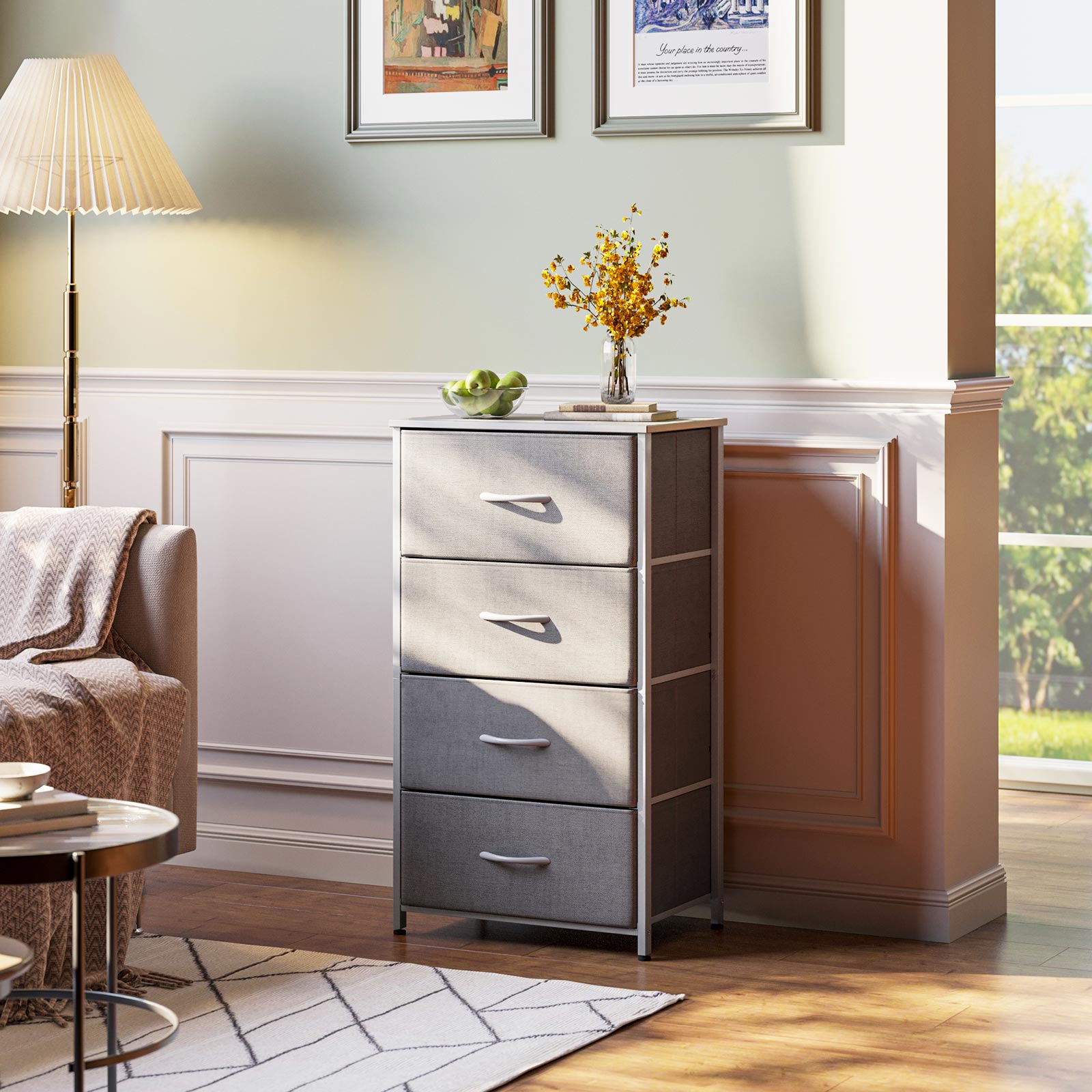
An all-open unit can work for books, but it often leaves a dual-purpose room looking too office-led. On the other hand, fully closed storage can make everyday work less convenient. For guest room storage furniture, mixed formats tend to be the most practical because they let you keep daily items accessible while hiding the messier parts of work.
A practical product mix
- Tall bookcase with doors and cabinet: better for books, files, baskets and mixed household items
- Narrow drawer cabinet: better for cables, stationery, folded textiles and smaller loose items
- Larger drawer unit with rail: better where guest clothes storage matters too
The Coleshome Narrow 4-Drawer Storage Cabinet suits tighter layouts because it measures 40 × 30 × 81 cm and uses four fabric drawers with a wooden top. If your room needs a little more guest support, the Coleshome 6-Drawer Storage Cabinet with Hanging Rail and Power adds six drawers, a hanging rail, bottom storage and a reversible layout within a 110 × 30 × 106 cm footprint.
Shop:Coleshome Narrow 4-Drawer Storage Cabinet
Build your layout around reset speed, not maximum volume

The best compact home office storage is not always the piece that holds the most. It is usually the one that helps you put the room back into guest mode in five minutes. That means chargers, papers and laptop accessories need a clear home, and at least one shelf or drawer should stay available for visitors.
What to do
- Store work items in drawers or lower cabinets at the end of the day
- Keep upper shelves lighter for books or simple décor
- Leave one drawer, basket or shelf free for guest use
- Keep daily work tools between waist and shoulder height
Good combinations for a work-from-home corner storage setup
- A tall bookcase for files, baskets and hidden clutter
- A slim drawer unit beside the desk for smaller essentials
- A larger drawer-and-rail unit if guests need clothing storage too
If you expect the room to change again later, flexible furniture usually gives better long-term value than highly specialised office pieces.
Shop:Coleshome 6-Drawer Storage Cabinet with Hanging Rail and Power
Choose furniture that still works if the room changes again
Spare rooms rarely stay fixed. A home office can become a guest room, hobby room or shared storage zone within a year. That is why move-friendly proportions and practical assembly matter. Coleshome positions its range around small and changing homes, and that suits rented flats particularly well.
Prerequisites and safety checks
- Measure wall width, depth and access route first
- Check radiator and socket positions before final placement
- Use supplied anti-tip hardware on tall units
- Avoid overloading top shelves with heavy items
- Confirm drawer or door clearance before assembly
Troubleshooting
| Problem | Likely cause | Fix |
|---|---|---|
| Room feels too office-like | Too much open storage | Hide papers in drawers |
| Guests lack storage space | Everything assigned to work | Leave one drawer free |
| Layout feels cramped | Unit too wide or deep | Switch to taller, slimmer furniture |
| Access feels awkward | Clearance not measured | Recheck door and drawer swing |
| Tall unit feels heavy | Too many bulky pieces | Use one vertical focal unit |